
Vacant Property
An empty building still carries risk and still deteriorates. We hold a schedule of inspections, security arrangements and compliance checks so the asset is protected and ready when it is needed.

Scheduled inspection
Written reports on condition, ingress, damage and unauthorised entry.
Security and access
Keyholding, patrols and access control arrangements set to the risk on the site.
Handback readiness
Clearance, cleaning and records prepared for reletting, sale or reoccupation.
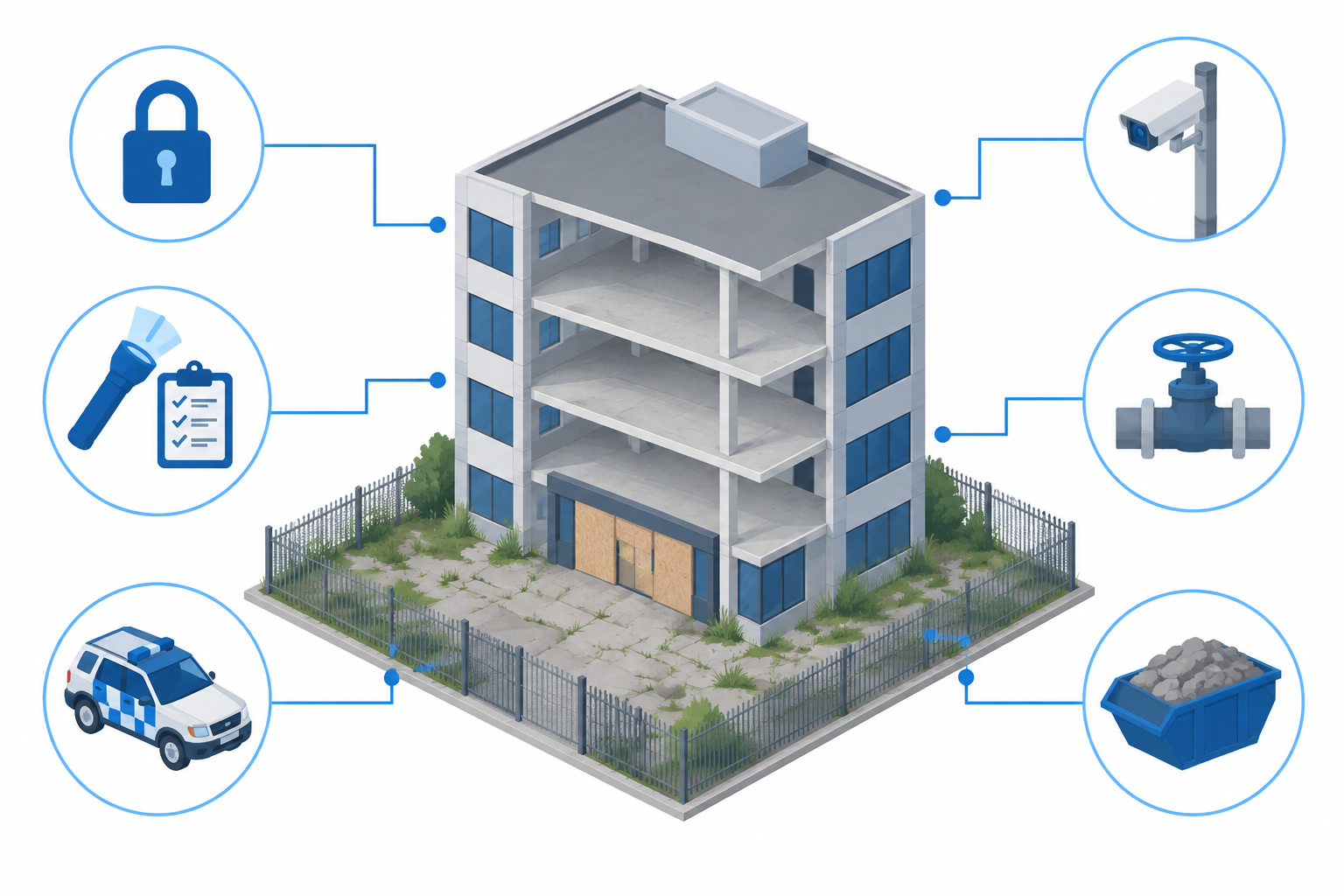
How an empty building is held
A schedule of inspections, security arrangements and compliance checks protects the asset and keeps it ready for its next use.
- 01Scheduled inspections
- 02Keyholding and alarm response
- 03Mobile patrols
- 04Utilities and isolation checks
- 05Water and drainage checks
- 06Clearance and waste removal
- 07Grounds and boundary upkeep
- 08Condition reporting
Inspection on a written schedule
Each visit follows the same checklist: ingress, damage, unauthorised entry, water and drainage, fire precautions and boundary condition, with photographs and a dated report each time.
Security set to the risk
Keyholding, patrol frequency and access arrangements are set against the location, the building's condition and how long it will stay empty, and reviewed as those change.
Ready for handback
Clearance, cleaning, minor repairs and records are prepared ahead of reletting, sale or reoccupation so the building can be handed over without a scramble.
- Dated inspection reports with photographs
- Patrol and alarm response records
- Utility, water and fire precaution checks
- Clearance and remedial works records