
Commercial
Occupied offices and multi-tenant buildings judged on how they look and feel every morning. We hold cleaning, engineering and security under one contract so front of house, plant and access arrangements are coordinated rather than argued over.

Presentation before the first arrival
Cleaning and front-of-house cover set around the hours the building actually fills up.
Tenant and landlord clarity
Scope written down per demise so it is clear what sits with the landlord and what sits with the tenant.
Quiet engineering
Planned works scheduled around occupancy, with noisy or disruptive tasks moved outside core hours.
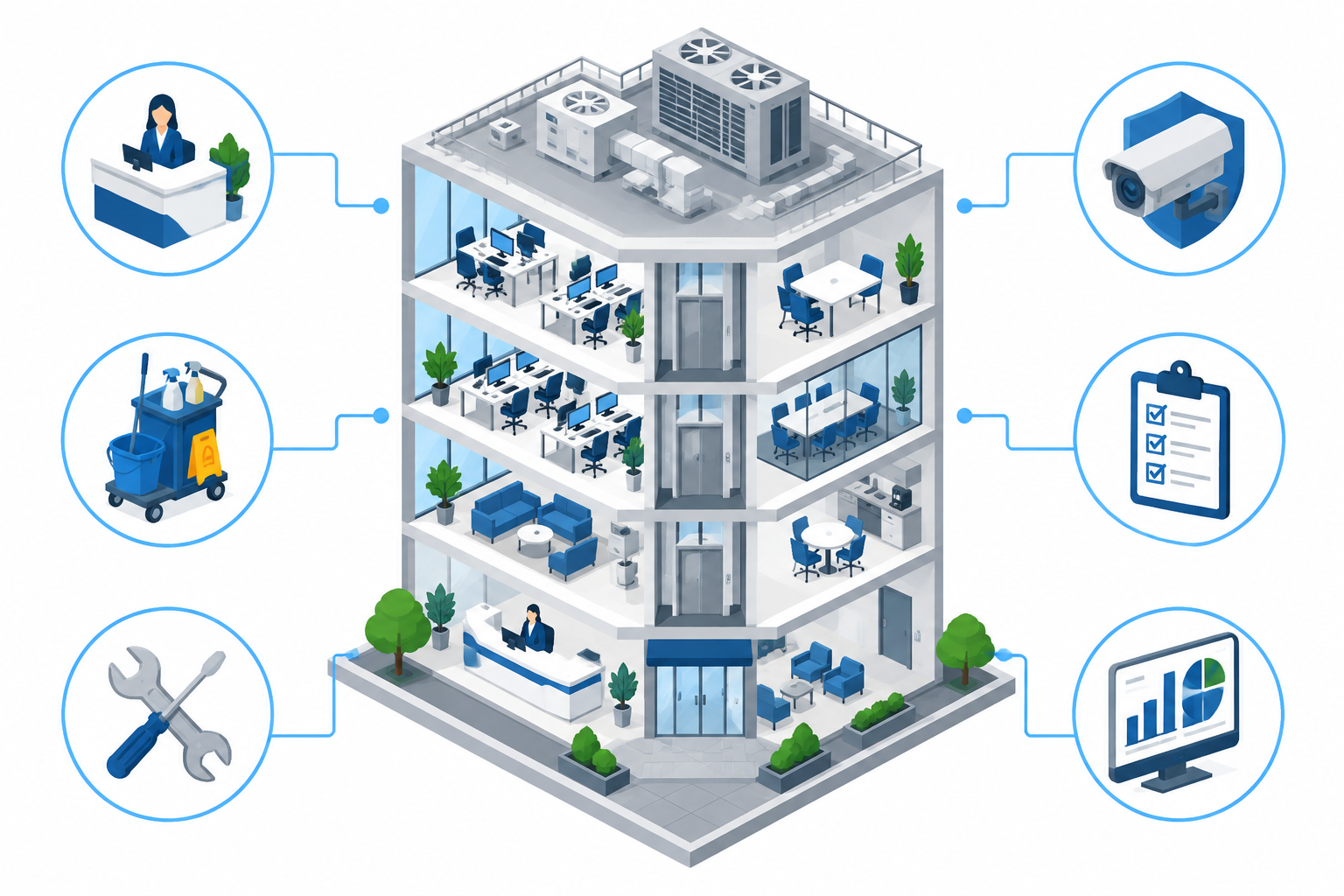
How a commercial building is covered
Front of house, cleaning, engineering and security sit under one contract, so cover is planned against the hours the building is actually used.
- 01Front of house and reception
- 02Daily and periodic cleaning
- 03Planned maintenance
- 04Reactive attendance
- 05Security and access
- 06Compliance records
- 07Waste and recycling
- 08Monthly reporting
How the day is planned
Cover is built backwards from occupancy. Cleaning and front-of-house hours are set around when the building fills and empties, periodic tasks are loaded into quieter windows, and noisy engineering work is moved outside core hours by agreement.
Where scope is usually argued over
Multi-tenant buildings create grey areas between landlord and tenant. We write scope down per demise at mobilisation: who cleans what, who holds plant responsibility, who authorises reactive spend, and what happens in shared areas and risers.
Managing change across the year
Occupancy changes, fit-outs and tenant churn all move the workload. Scope is reviewed at agreed intervals so cover, frequencies and access arrangements track how the building is actually being used rather than the original specification.
- Task records against the agreed cleaning specification
- Planned maintenance history per asset
- Reactive jobs with attendance and completion notes
- Access, visitor and incident records where applicable